Operations Monthly
1200+ — Milda Clinic
An internal approach: incisions stay inside the nostrils.
Closed rhinoplasty uses internal incisions to reshape the bridge and make selected changes to the tip. Your anatomy and the extent of correction determine whether closed or open access is appropriate. Request a personal assessment and written treatment plan.
Get My Free Surgical PlanIstanbulTreatment planning
TR / ENPatient communication
PersonalSurgical assessment
WhatsAppDirect contact
Explore Milda Clinic before and after images of bridge reduction and tip refinement from several angles.
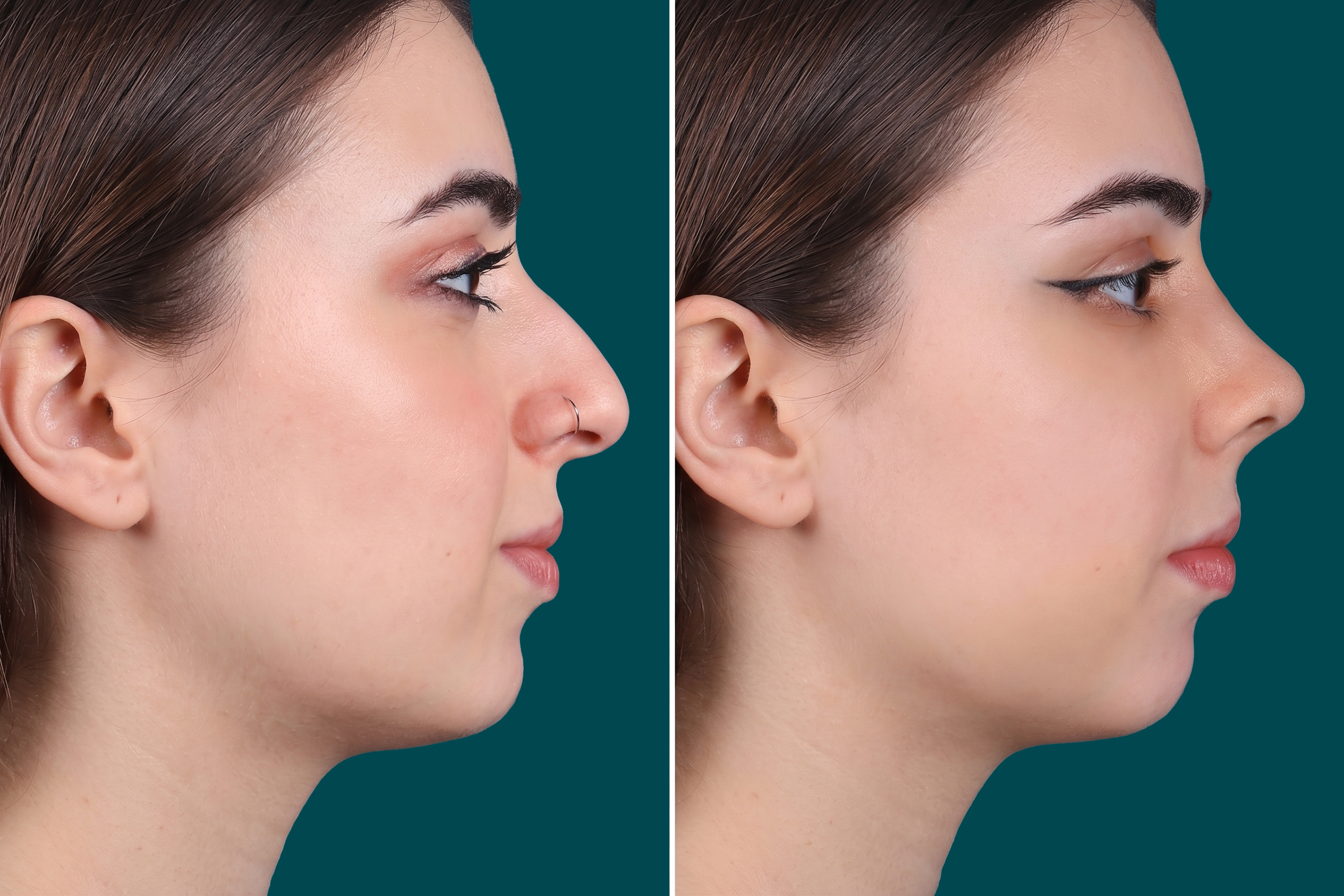
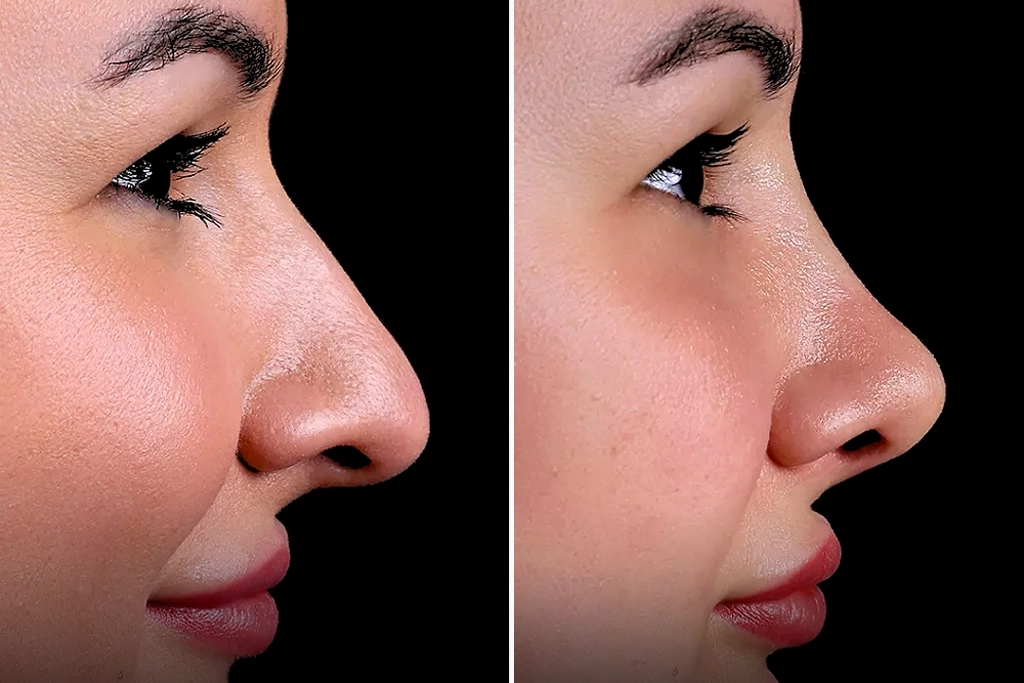
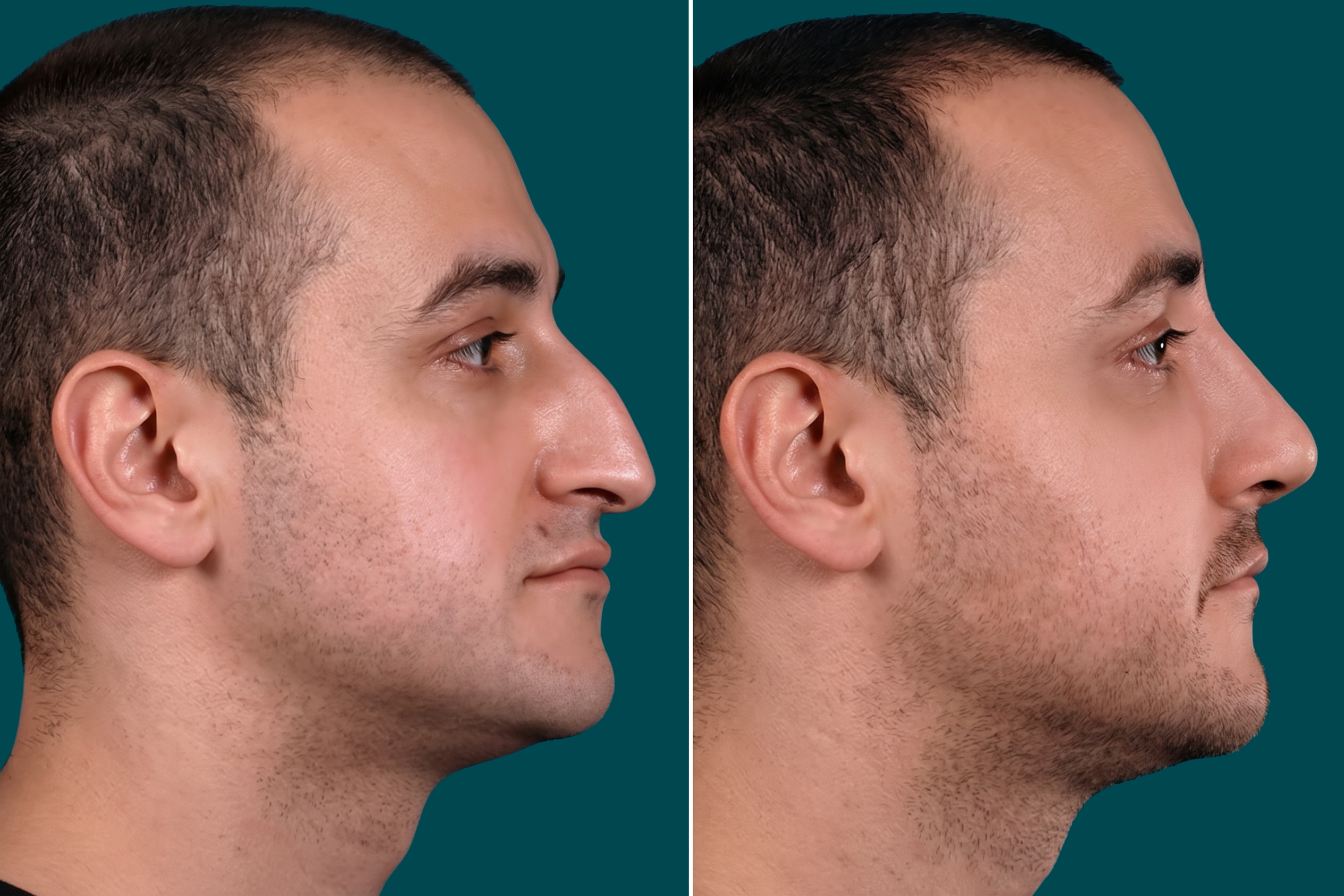
Individual outcomes vary.

Milda Clinic brings hair transplantation, dentistry, facial, body and breast aesthetics and other specialities together in Istanbul. Explore our facilities.
1200+ — Milda Clinic
50+ — Milda Clinic
360° — Milda Clinic
150+ — Milda Clinic
Milda Clinic confirms your treatment team, services and personalised quotation after assessment.
Access, incision placement and the demands of the technique distinguish this approach from open rhinoplasty. Advantages and limitations belong in the same discussion.

Closed rhinoplasty reshapes the nose through incisions inside the nostrils. The skin across the columella is not opened. The surgeon works on the bridge, tip and, where needed, septum through these internal openings.
TYPICAL CASESAccess through the inside of both nostril rims, hidden from external view.
WHAT IT CHANGESNo external columellar incision to dress or remove stitches from.
Milda Clinic lists closed and open rhinoplasty from €3,000, and a complex procedure requiring rib cartilage at €4,000. Milda Clinic provides your own quotation after assessment.
| TURKEY 🇹🇷MILDA CLINIC | UK 🇬🇧 | GERMANY 🇩🇪 | USA 🇺🇸 | |
|---|---|---|---|---|
| Closed rhinoplastyIncisions inside the nostrils | FROM€3,000 | €8,150 – 11,700 | €5,500 – 6,900 | €7,750 – 21,550 |
Milda Clinic confirms your treatment team, services and personalised quotation after assessment.
Confirm the facility and hospital services in your written plan.
Review your health history and anaesthesia plan before surgery.
Clarify transfers, language support and examination arrangements.
Agree the review schedule and contact route before travelling.
Experience with internal access, careful planning and follow-up matter alongside cost. Compare the surgeon, facility and complete treatment plan before deciding to travel.
Ask about the surgeon’s experience with limited-visibility work and anatomy similar to yours.
Photographs and examination help assess the bridge, tip, symmetry and airway.

Compare hospital, anaesthesia, functional correction and aftercare.

Allow time for surgery, splint removal and a pre-flight review.

Confirm how questions, appointments and recovery instructions will be communicated.
Review the clinician’s qualifications, facility and anaesthesia assessment.
Assessment, internal access, splint review and gradual refinement — follow the four stages.
It may suit hump reduction, moderate narrowing and limited tip refinement when the framework is reasonably symmetrical. Extensive reconstruction or grafting may require open access. Suitability is decided by examination.
Bridge and tip are reshaped through internal incisions. Septal correction may be included when function requires it.
The splint is commonly removed around a week. Standard closed access leaves no external columellar stitches to remove.
Swelling gradually reduces and tip definition develops over months. Some patients have less early swelling with closed access, but this does not guarantee a faster final result. Skin thickness and the extent of surgery matter.
Incisions inside the nostrils: who the approach suits and how recovery develops.
Closed rhinoplasty reshapes the nose through incisions inside the nostrils. The skin across the columella is not opened. The surgeon works on the bridge, tip and, where needed, septum through these internal openings.
It may suit hump reduction, moderate narrowing and limited tip refinement when the framework is reasonably symmetrical. Extensive reconstruction or grafting may require open access. Suitability is decided by examination.
If the septum or nasal airway contributes to obstruction, functional correction may be combined with reshaping through internal incisions. Your surgeon assesses breathing on both sides before recommending the plan.
Access, the condition of the nose and the aesthetic goal are separate considerations. Explore the related approaches.
Discuss your goals and treatment history. An assessment helps explain whether closed access fits your nose or whether open access would better support the required changes.
Get My Free Surgical Plan→Choosing closed access means assessing what can be achieved reliably through limited openings. This guide covers choices, limitations and recovery questions.
Closed rhinoplasty reshapes the nose through incisions inside the nostrils. The skin across the columella is not opened. The surgeon works on the bridge, tip and, where needed, septum through these internal openings.
The surgeon reaches the nasal framework through incisions on the inside of the nostrils. Depending on the plan, bone and cartilage at the hump are reduced, the nasal bones may be repositioned, and the tip may be refined. Internal incisions are closed and an external splint supports the early healing period. Anaesthesia and hospital stay are arranged individually.
The standard closed approach places incisions inside the nostrils, so there is no columellar skin incision. Additional nostril narrowing can involve separate external incisions; your surgeon should explain these if planned.
It may suit hump reduction, moderate narrowing and limited tip refinement when the framework is reasonably symmetrical. Extensive reconstruction or grafting may require open access. Suitability is decided by examination.
A lower bridge, a narrower bony framework and limited changes in tip projection can sometimes be achieved through closed access. Skin does not contract without limit: a large reduction under thick skin may not reveal the intended definition. The surgeon should explain the realistic amount of change.
Internal access gives less direct visibility of the tip cartilages. Significant asymmetry, major tip reconstruction and complex grafting may be better managed with open access.
Access and aesthetic goals are separate decisions. Bridge shape, tip rotation and projection are planned around facial proportions and the patient’s preferences. A modest change may be possible through internal access, while substantial tip reconstruction can require an open approach.
Unexpected scar tissue or cartilage characteristics may lead to a change in access. If this possibility is relevant, it should be discussed during consent, including the reason for changing technique and the implications for incisions.
Swelling gradually reduces and tip definition develops over months. Some patients have less early swelling with closed access, but this does not guarantee a faster final result. Skin thickness and the extent of surgery matter.
If the septum or nasal airway contributes to obstruction, functional correction may be combined with reshaping through internal incisions. Your surgeon assesses breathing on both sides before recommending the plan.
Thick skin can obscure fine changes at the tip with either approach. When substantial support must be added beneath thick skin, the surgeon may prefer direct exposure. The examination evaluates the relationship between skin, cartilage strength and the desired shape.
The first days commonly involve congestion and puffiness around the eyes. Splint review is often around a week; bruising may take about two weeks to fade. Your team sets individual restrictions for glasses, nose blowing, exercise and contact sports. Attend the planned reviews before increasing activity or travelling.
Possible risks include bleeding, infection, swelling, bruising, altered sensation, breathing changes, contour irregularities and a later revision. The absence of a columellar incision does not remove the general risks of nasal surgery.
Changes to bone and cartilage are intended to be lasting, but surgery does not stop ageing. Skin, support and tip position can change over time. Injury or healing differences may also affect the result.
Milda Clinic describes seven to ten nights including an initial hospital stay. Your dates must be confirmed by the treating team, allowing for splint removal and a pre-flight assessment. Do not treat a general timeline as individual clearance to fly.
Compare consistent views, lighting and the date after surgery. Side views show the bridge, while three-quarter views may reveal contour differences. Early photographs still include swelling. A case with similar anatomy can be informative, but cannot promise your result.
Milda Clinic lists a first closed rhinoplasty from €3,000. Your personalised quotation is confirmed after assessment. Your written quotation should identify the surgery, hospital services and follow-up included.
An initial discussion may use front, side, three-quarter and underside views in clear daylight. Mention breathing problems, previous injury and earlier surgery. Ask how images should be shared securely and remember that photographs do not replace an in-person examination.